
Reflections from the 2026 EU Citizens Gathering
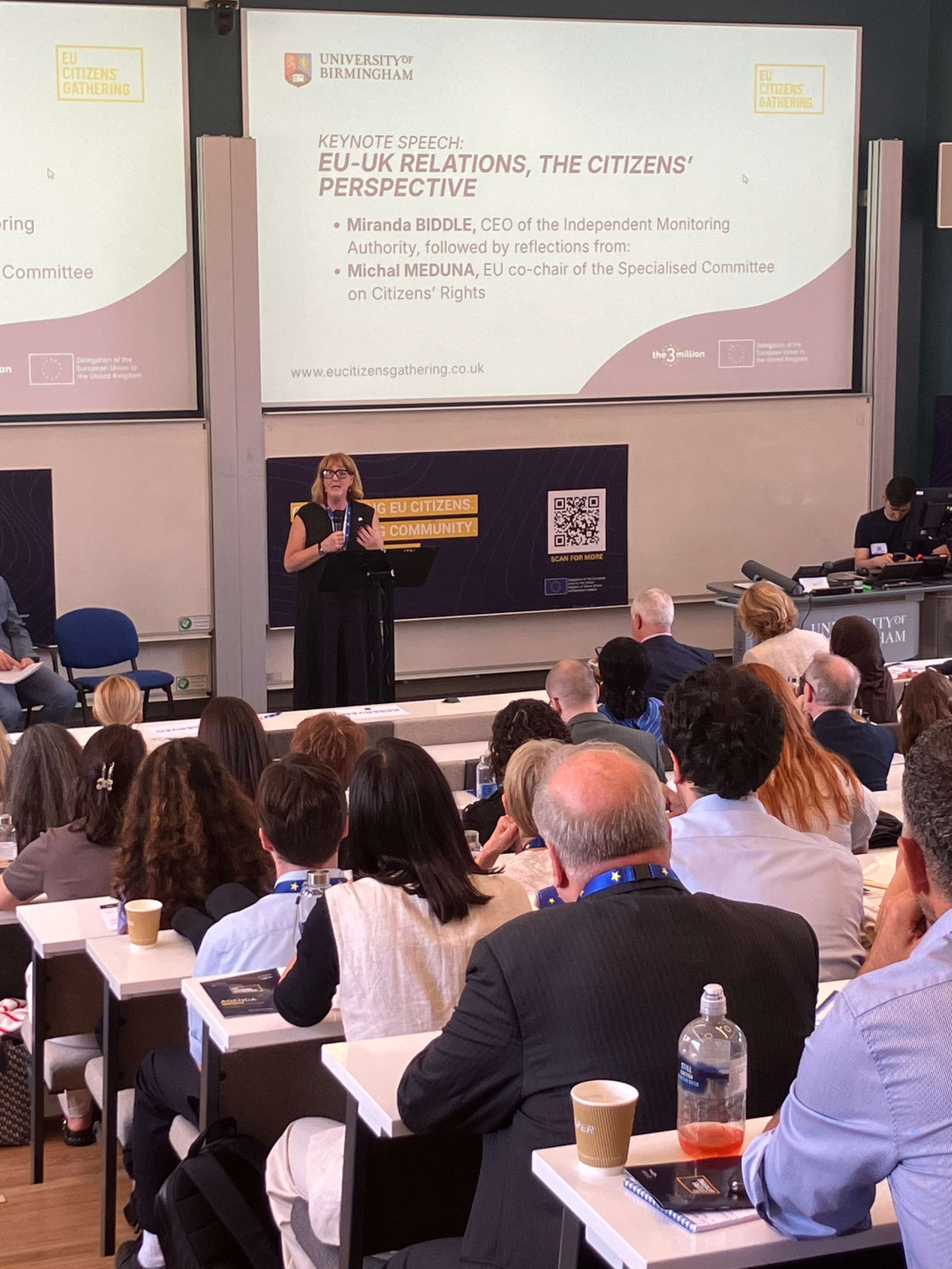
The IMA was delighted to attend the EU Delegation Citizens’ Gathering last week where our Chief Executive Miranda Biddle gave a speech. Here are some of Miranda’s reflections from the event:
The IMA was delighted to attend the EU Delegation Citizens’ Gathering last week where our Chief Executive Miranda Biddle gave a speech. Here are some of Miranda’s reflections from the event:
It was a pleasure to speak at the EU Delegation’s Citizens’ Gathering in Birmingham last week. I was invited to outline the IMA’s work to protect citizens’ rights and to reflect on the experiences shared with us by the sector.
We greatly value our ongoing engagement with citizens’ representative groups. Through this work, alongside the complaints we receive and our engagement with public authorities, we are better able to understand the experiences of EU nationals living in the UK since Brexit and the importance of ensuring their rights are properly protected.
Currently, 5,8 million people have received EUSS status; this is roughly 8% of the UK population — almost one in ten people. Around 71% are in paid employment, representing nearly 7% of the PAYE population. Approximately 1.2 million EU payrolled citizens are aged 35 to 49, with the five largest nationalities being Polish, Romanian, Italian, Portuguese and Spanish. The Migration Observatory have reported that average earnings among EU-born workers are similar to those of UK-born workers, and Oxford Economics research estimates that EU citizens in the UK contribute substantially to UK public finances, paying more in taxes than they receive in public services and benefits
This demonstrates how important it is that rights, including the right to work, are easy to access and properly upheld. Beyond the clear contribution EU citizens make to the economy, access to rights also supports wider integration for individuals and their families.
It is encouraging that 5.8 million people in the UK have now secured status under the EU Settlement Scheme. However, the work is far from complete. There remains significant confusion about the need to apply for children and babies born in the UK, with some communities disproportionately affected. Our own survey indicated that 38% of respondents had not applied for their children, which warrants further research.
Settled also published helpful research earlier this year highlighting potential wider gaps and higher numbers of “missing child applications”.
Status will therefore remain a key area of focus for the IMA as we monitor progress, equality and fairness, particularly in light of policy developments on curtailment decisions and status expiry.
The IMA will continue to raise awareness among policy makers and parliamentarians as changes are debated and, where necessary, challenge disproportionate impacts. We also have a role in helping public authorities understand their responsibilities and supporting them with information that aids frontline delivery.
Finally, I highlighted the challenge citizens face in accessing the right advice at the right time from skilled and regulated advisers. The EUSS Talent Advisor Programme being run by Seraphus will help strengthen resilience and knowledge within the sector, although we know services remain under pressure and there is a shortage of legal advisers.
The IMA will continue to promote awareness, contribute to resources and engage with communities. However, we rely on civil society to help ensure we focus our efforts where they are most needed. That is why we place such value on attending events like the Citizens’ Gathering and are grateful for the opportunity to speak to the sector in support of the monitoring and promotional work the IMA was established to carry out.