
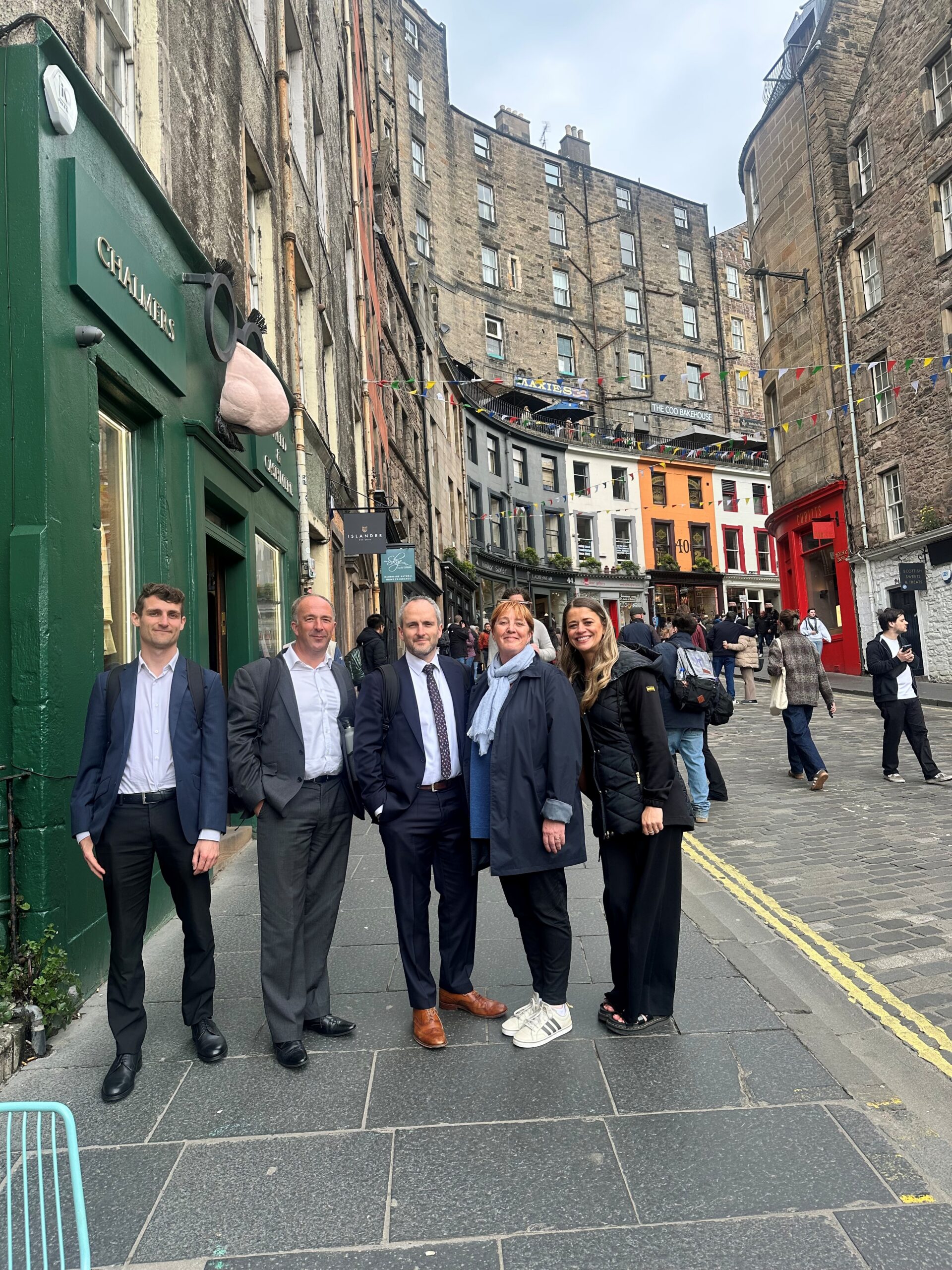
IMA gains insights into life for EU citizens in Scotland after visit
The Independent Monitoring Authority (IMA), which promotes and monitors citizens’ rights in the UK following Brexit, recently went to Scotland to better understand the lives of EU citizens living there.
The Independent Monitoring Authority (IMA), which promotes and monitors citizens’ rights in the UK following Brexit, recently went to Scotland to better understand the lives of EU citizens living there.
Over a busy two days we met with a range of organisations which advocate for and support citizens’ rights as well as Government departments responsible for ensuring and maintaining access to relevant rights.
During these conversations we heard about several key concerns affecting people in Scotland, many of which reflect experiences across the UK. The main themes discussed were:
Gaining and retaining status
Where clear and accessible information is lacking, there is a risk that misinformation about rights and eligibility under the EU Settlement Scheme (EUSS) will spread within communities. Representative organisations continue, where possible, to support new applicants, many of whom are making late applications for a wide range of reasons. These cases are becoming increasingly complex and often require significant assistance to secure the correct status under the EUSS. We were also told there is a serious shortage of qualified immigration advisers, increasing both the difficulty of obtaining support and the risk that people may turn to unqualified or unregulated advice. The challenges resulting from a lack of available advice are illustrated in a case study at the end of this article.
Earlier this year, the IMA reported that the UK Government had decided to withdraw funding from organisations established to support EUSS applicants. Stakeholders told us that the Home Office vulnerability team had provided helpful support where additional needs were identified. However, we also heard concerns about the Home Office’s UKVI Resolution Centre, which is the main route for official support for people needing help with their application or immigration status.
There remains significant concern about the risk of people with pre-settled status losing that status, particularly where they may have been absent from the UK for longer than permitted under the EUSS absence rules. Under new government policy introduced this year, gaps in residency may lead to consideration of cancellation. As this process is rolled out, there is anxiety about how it will operate in practice and whether safeguards will work effectively to prevent eligible individuals from experiencing any interruption to their rights.
There remains significant concern about the risk of people with pre-settled status losing that status due to periods of absence from the UK. Under new government policy introduced this year, gaps in residency beyond those allowed in the EUSS absence rules may lead to consideration of curtailment of status. As this process is rolled out, there is anxiety about how it will operate in practice and whether safeguards will work effectively to prevent eligible individuals from experiencing any interruption to their rights.
At this very early stage, these concerns have not yet developed into practical issues reported to the IMA. Further information on the absence rules is available on our website.
Future generations
There is growing demand for clearer information to help future generations understand the EUSS, particularly where status may not have been secured on a child’s behalf during childhood. We know this has been a longstanding concern, and we have an ongoing campaign to help parents and young people improve understanding around this.
It is also important that there is clarity about rights while an EUSS application is being determined. Under the Withdrawal Agreement, rights enjoyed before Brexit should continue from the point a valid EUSS application is made. This temporary protection must be consistently embedded across government systems, from employment to social security, to ensure it works effectively in practice.
Many from the organisations we met with said that people often struggle to understand their rights, know how to exercise them, or navigate the system when problems arise. Poor information, limited digital skills, and the perceived complexity of digital status systems can make these difficulties worse, particularly for older people, disabled people, and those in unstable circumstances, including those with complex support needs. As a result, these barriers can widen inequalities and limit access to reliable information and support.
There is recognition that people’s needs change as they get older, and that greater clarity is needed about how this interacts with rights under the Agreements, for example in relation to pensions, social care, and NHS treatment. As such the IMA is developing new information to support better understanding of entitlement in later life and how to navigate the system.
We also met with representatives from the Scottish Government to better understand how citizens’ rights protected under the Withdrawal Agreements are reflected in current and future legislation and policy. The IMA seeks to ensure that these rights remain fully protected and that due regard is given to the unique arrangements promised to EU nationals and their families, so that they can continue their lives with confidence despite the UK’s departure from the EU. More information about these rights is available on our website.
We are grateful to the organisations that took the time to meet with us in Scotland and help inform our work, including: Settled, Simons Community, Turning Point Scotland, Citizens Advice, Law Society Scotland, International Organisation for Migration, Child Poverty Action Group (CPAG), Scottish Public Services Ombudsman, COSLA, Citizens Rights Project, Human Rights Consortium Scotland, Intercultural Youth Scotland, Latin America Community Association of Edinburgh, Feniks, No Boundaries School, Edinburgh & Lothians Regional Equality Council (ELREC) and members of our Citizens Panel and Honorary Consuls.
We also had the opportunity to meet with Joy Hosie, President of the Scottish Security Chamber within Scottish Tribunals.
The barriers vulnerable migrants can face – a case study provided by Settled
On 17 April, the Polish Consulate in Edinburgh contacted the Citizens Rights Project (CRP) regarding a Polish national detained at Aberdeen Airport, where his passport had been seized.
He was scheduled for removal to Poland on 21 April after previously failing to secure permanent residence status and residing in the United Kingdom as a tourist.
CRP was asked to assess whether any legal avenues remained to prevent his removal.
The case highlights significant barriers faced by vulnerable migrants. The individual had struggled to submit a valid EUSS application and had been unable to access appropriate legal advice. He was forced to use unregulated immigration ‘advisors’, who he believed had handled his case. He also speaks very little English.
In an area known for its shortage of regulated immigration services, he only managed to seek help after being refused Leave to Enter by UK Border Force on 16 April 2026 at Aberdeen Airport.
Following this, he was referred by the Citizens Rights Project to Settled, where he finally received qualified legal support to address the complexities of his case.
The client had originally entered the United Kingdom on 17 October 2017. His residence was interrupted during 2020 and 2021 due to the COVID-19 pandemic, before he returned in June 2022 and has remained in the United Kingdom since.
Evidence of his residence was submitted as part of his application. An automated check linked to his National Insurance number confirmed periods of residence in 2020, 2023, and 2024. Additional documentation was provided, including evidence
covering the period between July 2022 and March 2023, supported by letters from a priest at Our Lady of Aberdeen Roman Catholic Church and the Polish Association of Aberdeen.
Settled requested urgent and compassionate consideration of the late application, including the issuance of a Certificate of Application and the suspension of removal proceedings to allow proper assessment of the case. Settled also urged the Secretary of State to apply evidential flexibility, considering the applicant’s vulnerability and the inadequate advice he previously received.
Despite these submissions, the UK Border Force issued new Removal Directions, scheduling removal for 2 May. In light of this, Settled requested an expedited decision by the EUSS Vulnerability Team.
On 29 April, the client finally received an email confirming that he had been granted Indefinite Leave to Remain in the United Kingdom (Settled Status).