
The IMA receives complaints as part of our duty to monitor and promote the implementation and application of the Citizens’ Rights parts of the Withdrawal and Separation Agreements.
The IMA received 152 complaints in 2023. Whilst this is lower than previous years, complaints continue to be key to helping us to understand issues citizens are experiencing who feel their rights aren’t being upheld by public bodies.
Out of the 109 complaints received that were within the IMA’s remit, 72% of complaints relate to new or ongoing issues being considered by the IMA. Information about our ongoing work is published on our Issues Log.
In this article we detail the volume and types of complaints we received in 2023, including the rights affected, the public bodies involved, and the nationalities of those who submitted complaints. The data relates to all complaints, both within and not within our remit.
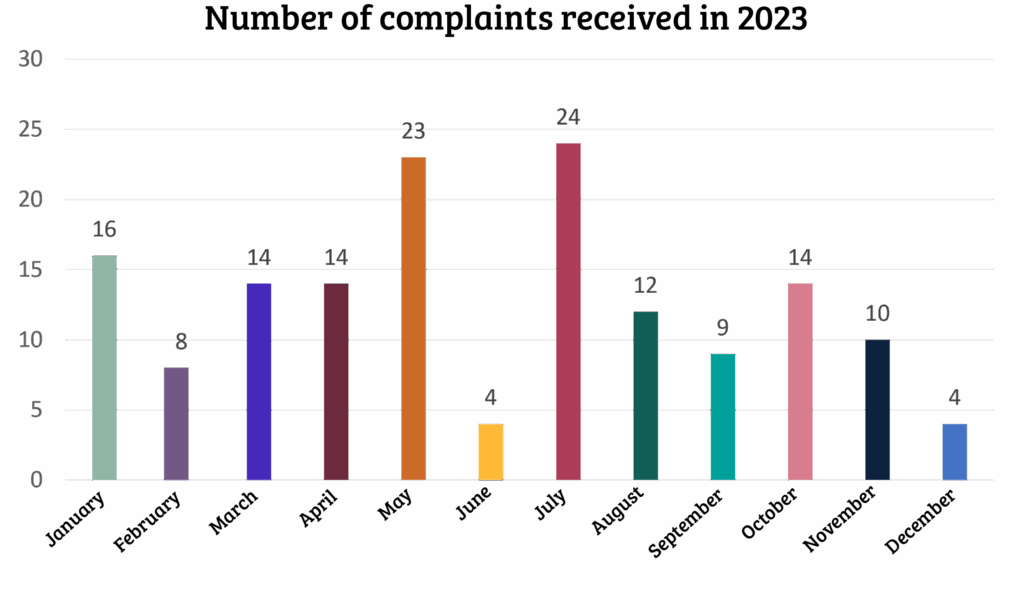
The IMA received 152 complaints from 1 January to 31 December 2023. We received the most complaints in July.
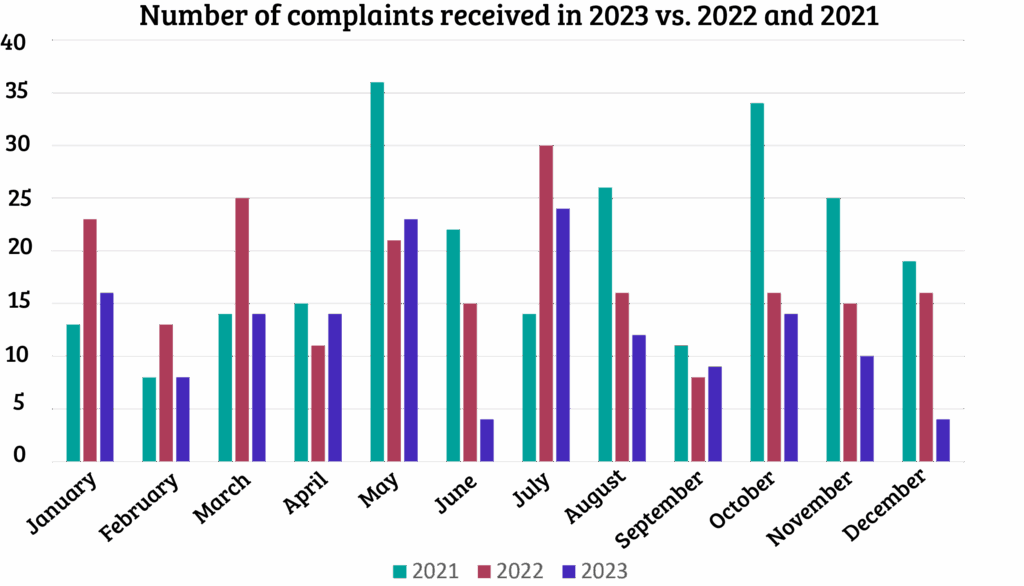
Figure 2 (above) shows how many complaints have been received in each year the IMA has been in operation.
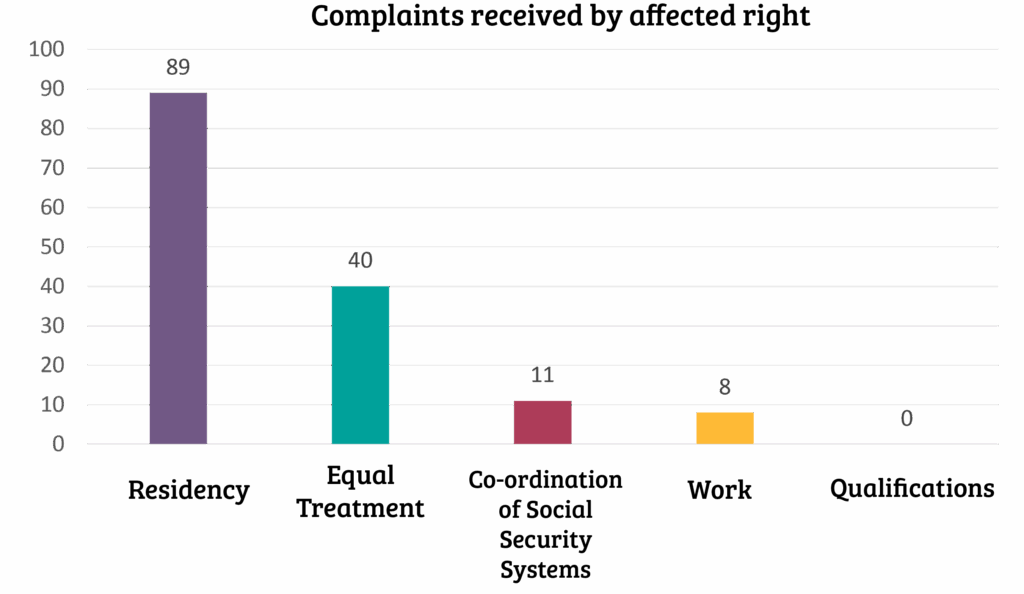
Residency – The right to reside includes the right to enter and exit the UK.
The complaints are mainly connected in some way to the UK Government’s EU Settlement Scheme (EUSS), run by the Home Office.
The issues raised in these types of complaints include:
Citizens experiencing long wait times for their EUSS applications, beyond estimated application processing times advised by the Home Office.
Lengthy EUSS administrative reviews and an inability by applicants to obtain updated information as the review progresses.
Work – The right to work, including self-employed work. It also applies to frontier workers; citizens who are employed or self-employed in the UK but live elsewhere.
The issues raised in these types of complaints include issues affecting the View and Prove service which inhibit citizens’ ability to access their proof of status.
Qualifications – the right for qualifications which have already been recognised before 31 December 2020 (or were in the process of being recognised at that time), to continue to be recognised in the UK.
We received no complaints in 2023 relating to this right.
Social Security – Individuals who have lived in both the UK and the EU before the end of the transition period can continue to access pensions, benefits, and other forms of social security.
The issues raised in these complaints include difficulties applying for benefits, difficulties in applying for proof of national insurance contributions, and delays in receiving the proof of national insurance contributions.
Equal Treatment – EU and EEA EFTA citizens and their family members must be treated the same as UK and Gibraltarian citizens when it comes to accessing certain public services and some benefits.
The issues raised in these complaints include citizens experiencing challenges and refusals at UK borders, relating to EUSS status and access to housing.
Equal Treatment – EU and EEA EFTA citizens and their family members must be treated the same as UK and Gibraltarian citizens when it comes to accessing certain public services and some benefits.
The issues raised in these complaints include citizens experiencing challenges and refusals at UK borders, relating to EUSS status and access to housing.
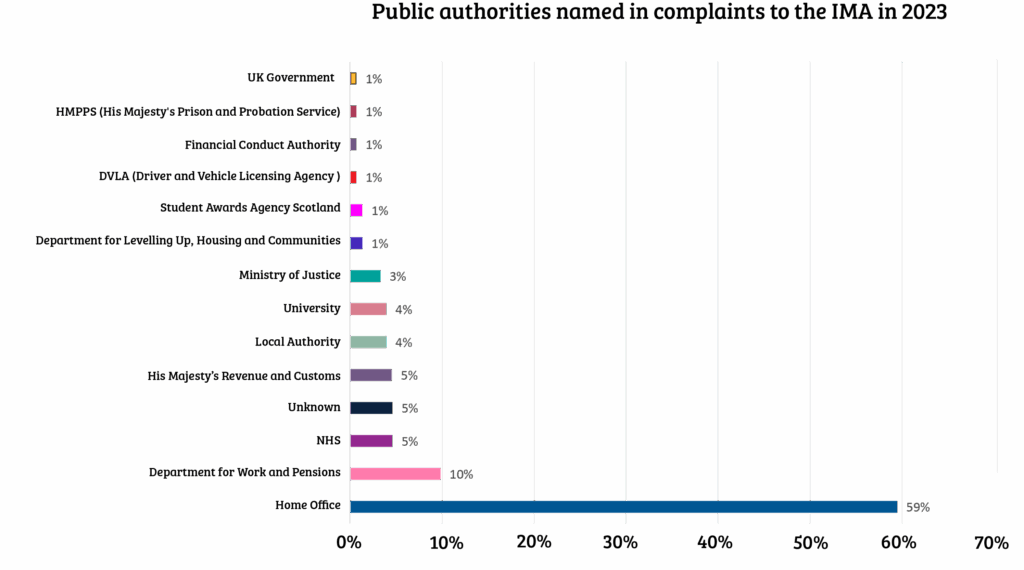
Figure 4 (above) demonstrates that most of the complaints reported to the IMA relate to the Home Office, followed by Department for Work and Pensions. The third largest group of complaints related equally to His Majesty’s Revenue and Customs, the NHS and the ‘unknown’ category where there was no public authority identified.
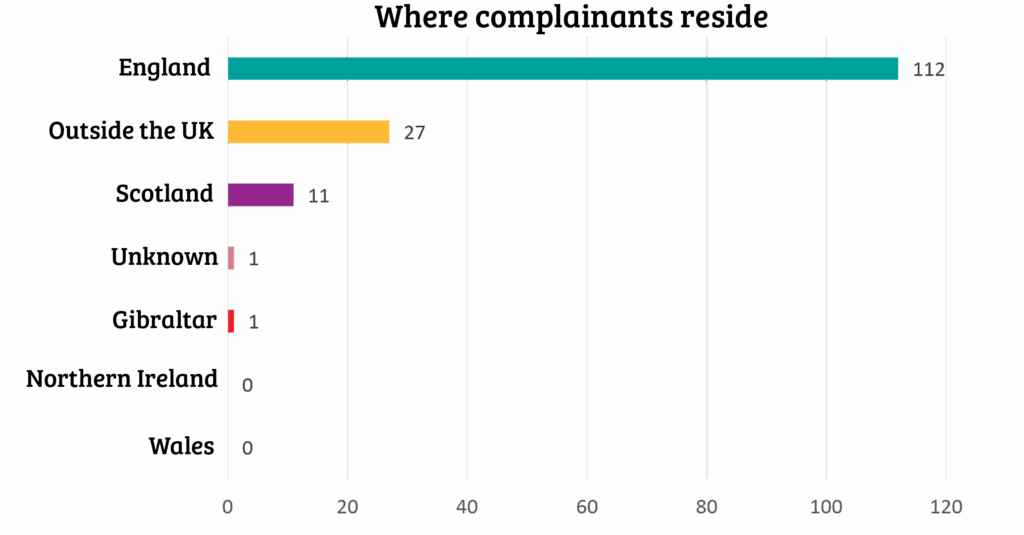
Figure 5 (above) shows where citizens complaining to the IMA in 2023 reside. Most complainants reside in England, this mirrors 2021 and 2022. Those living outside the UK, include complainants who are joining relevant family members already residing in the UK. No complaints were received from citizens residing in Wales or Northern Ireland.
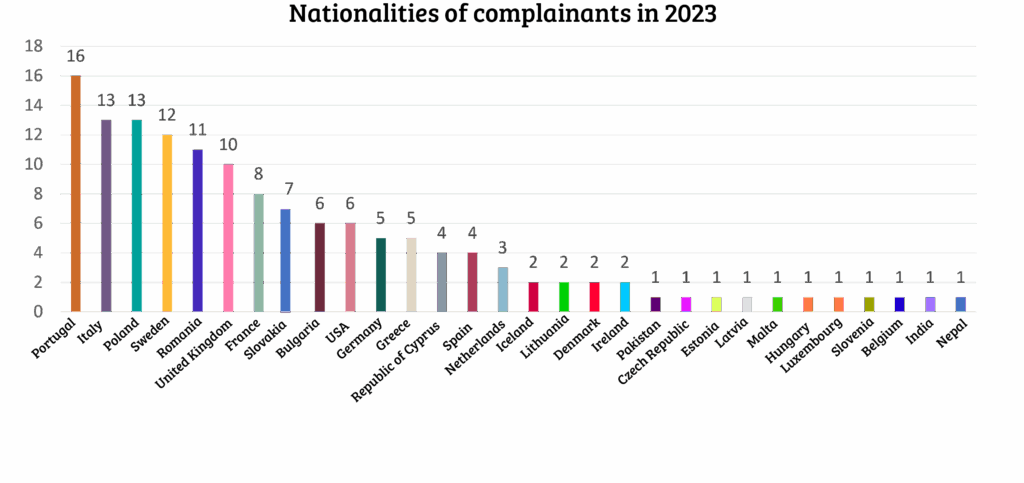
Finally, figure 6 (above) shows the nationalities of those who made complaints to the IMA in between 1 January 2023 and 30 June 2023.
We received complaints from citizens of over 70% of EU countries. We received our first complaints from citizens of Iceland. These were the only complaints from citizens of EEA EFTA countries.
Additionally, there were 10 citizens who recorded their nationality as ‘other’. These citizens are non-EU/EEA EFTA nationals, dual nationals or have not declared their nationality.