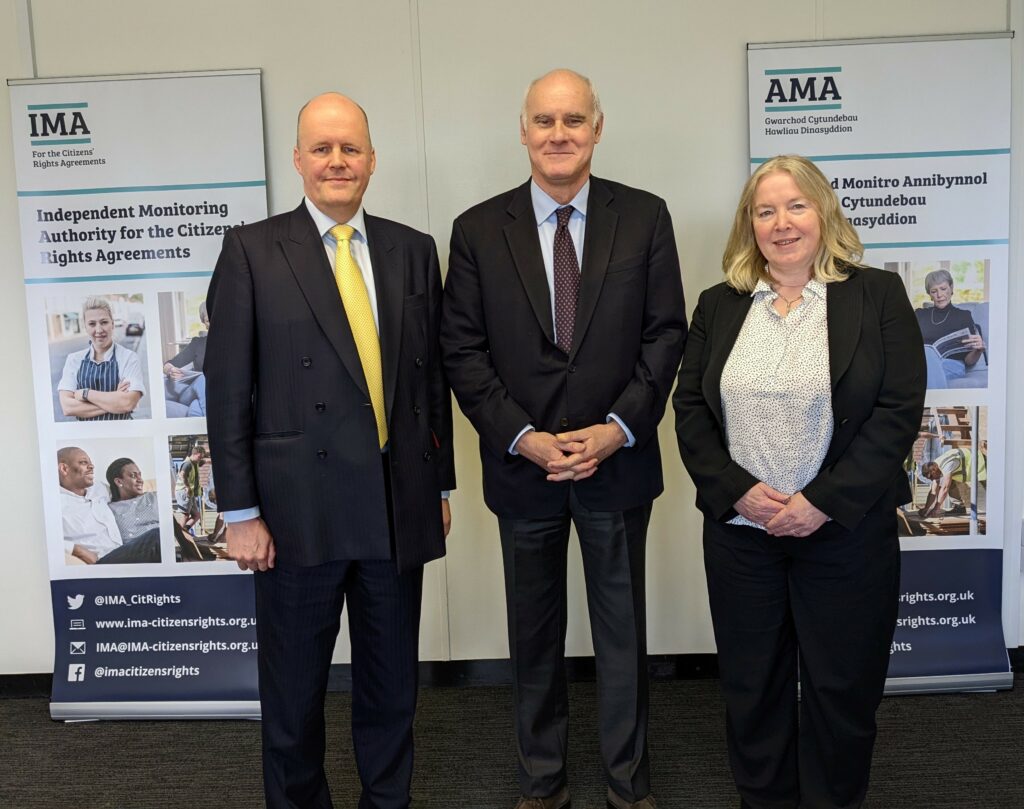

Drop-in session for the IMA’s inquiry into Certificates of Application

Are you, or do you know someone who has had problems whilst waiting for a decision on their EU Settlement Scheme application?

If so, then we invite you to join our lunchtime Drop-in session on 26th July at midday. It’s an opportunity to find out more about the IMA’s inquiry into Certificates of Application and how you can contribute to our work.

A Certificate of Application should be issued immediately when an EU Settlement Scheme application is made. It enables citizens to exercise relevant rights whilst their application is being considered. Without one, citizens could be blocked from getting work, accessing benefits, or securing a home.

At the Drop-in session, you will be able to find out more about the IMA’s inquiry and how you can contribute to our investigation.

We hope to see you on the 26 July. Link to Drop-in for the IMA’s inquiry into Certificates of Application.

Read more about the IMA’s inquiry into EUSS Certificate of Application delays.

Independent Monitoring Authority receives permission for judicial review hearing against Home Office

The hearing will take place at the Royal Courts of Justice on the 1st and 2nd of November 2022.

The application for judicial review is being sought on the basis that the IMA considers the Home Office’s position that citizens who fail to apply for Settled Status before the expiry of their Pre-Settled Status automatically lose their rights, is unlawful.

An IMA spokesperson said:

“We welcome the decision of the court to allow our case to be heard. This is an important milestone as we hope to provide clarity and certainty for the millions of citizens with Pre-Settled Status.

“In the meantime, we continue to encourage citizens experiencing difficulties in exercising their rights to make us aware of this via our online portal.”

Read the permission order in full on the IMA’s website.

Read more information about the background to the case via the IMA’s initial announcement (December 2020) and the Statement of Facts and Grounds.

The IMA encourages any citizen experiencing difficulties in exercising their rights to make them aware of this through their online portal.

Citizens’ Rights Watchdog Publishes First Annual Report

The IMA started work on the 31 December 2020 and was established as a result of the Withdrawal Agreement and the EEA EFTA Separation Agreement.

The IMA can hear citizens’ complaints and has the power to launch inquiries and, where appropriate, take legal action against public bodies if systemic issues are identified that are affecting citizens’ rights.

In its first annual report, the IMA highlights how the rights of citizens have been upheld by public bodies in the UK and Gibraltar in 2021 and contains information on:

  • measures taken by relevant public authorities to comply with the Agreements
  • the number and nature of the complaints made to the IMA; and
  • the work undertaken by the IMA in 2021

It also contains further information relevant to the first year of operation.

In 2021 the IMA:

  • dealt with 237 complaints
  • brought four cases to an early resolution
  • reviewed 145 pieces of legislation; and
  • used its powers to litigate on two occasions

The IMA has undertaken a comprehensive stakeholder engagement programme including meetings with representatives of the UK Government, Northern Ireland Executive, Scottish Government, Welsh Government and the Government of Gibraltar as well as advocacy and support groups representing EU citizens such as Settled, the 3Million, and Citizens’ Advice Services.

All EU Embassies have been approached for meetings and the majority have already taken place.

Dr Kathryn Chamberlain, IMA Chief Executive said:

“During our first year in operation we have learnt a great deal, not least about the complexity of the some of the issues facing citizens in their daily lives now that the UK has left the EU.

“Overall, we have sought to resolve identified issues through early resolutions with relevant public bodies as this helps citizens most directly. However, we have also used our formal powers, where appropriate, including commencing a judicial review against the Home Office in relation to arrangements for moving from pre-settled to settled status.

“We look forward to continuing our work to make sure the rights of citizens living in the UK and Gibraltar are upheld by public bodies, as well as promoting clear understanding of those rights by both citizens and public bodies alike.”

Full details of the work of the IMA can be found on the website. Citizens who feel their rights are not being upheld are also encouraged to report a complaint to the IMA via its portal.

IMA launches inquiry to investigate EUSS Certificate of Application delays

  • The call for evidence survey and evidence gathering phase of this inquiry have now closed. The IMA thanks the organisations and individuals who have taken the time to respond to the inquiry and we aim to shortly deliver an inquiry report summarising our findings.

EU, EEA EFTA citizens and their family members who applied to the EUSS but are awaiting the outcome of their application should receive a Certificate of Application immediately. This certificate can be used to evidence their rights, for example the right to work, rent or access benefits, while their application is being considered.

The inquiry comes as the IMA has received a number of complaints and information from citizens experiencing delays in receiving their Certificate of Application. The IMA will examine the extent, nature and cause of any delays in issuing the certificates and assess whether there is any breach of the Withdrawal and Separation Agreements. The IMA will also look at the impact any delays are having on citizens who are unable to exercise their rights until the Certificate of Application is issued.

Citizens were encouraged to share details of their experiences via a call for evidence survey and IMA has concluded its evidence gathering phase as part of the inquiry. The IMA thanks the organisations and individuals who have taken the time to respond.

As part of the inquiry, IMA staff reviewed existing complaints, took accounts from citizens and considered information from stakeholders and other third parties. The IMA also investigated the policies and processes adopted by the Home Office for issuing Certificates of Application. This included performing on-site visits and interviewing Home Office staff.

Dr Kathryn Chamberlain, IMA Chief Executive said:

“We recognise the potential impact this important issue could have on people’s lives and their rights. That’s why it’s crucial that we gather information from those affected to ensure we come to informed conclusions, and where appropriate, make recommendations to put things right.

“An inquiry will not lead to results overnight, therefore in the meantime we strongly encourage citizens experiencing ongoing issues to seek individual support through organisations which provide tailored advice.”  

Information about organisations which provide advice and support for EU and EEA EFTA citizens and their family members can be found on the IMA website.

The inquiry’s terms of reference can be found here.

IMA launches website Issues Log to inform public of work to uphold EU citizens’ rights

The Issues Log enables users to view details of topics being considered by the IMA as well as the action taken. The IMA considers areas of concern based on complaints reported by affected citizens, through its own monitoring of how public bodies in the UK and Gibraltar are protecting the rights of citizens, or through information gathered via its work.

The new dashboard will be regularly updated and increases transparency about the organisation’s operations and raises awareness amongst EU and EEA EFTA citizens living in the UK and Gibraltar about their rights.

The majority of work currently being undertaken by the IMA relates to the EU Settlement Scheme, with some of the issues first raised as part of the IMA’s Call for Evidence on the scheme last year. These include problems using share codes to access pre-settled or settled status and updating personal details.

Dr Kathryn Chamberlain, IMA Chief Executive said:

“Our values state that we are transparent in the way we operate, and we make impartial decisions that put citizens at the heart of what we do. The Issues Log will support those values.

“The EU Settlement Scheme is currently an area of focus for the IMA. We are continuing to examine some of the problems associated with the scheme to assess what impact they are having on the ability of individuals to exercise their rights. The Issues Log will provide a useful source of information for those looking for updates on how we are carrying out our duty to uphold citizens’ rights.”

EU Ambassador to the UK visits the Independent Monitoring Authority

Board Chair, Sir Ashley Fox outlined the IMA’s duties to monitor the application of citizens’ rights and promote their effective application before providing examples of some recent issues.

The EU Delegation also heard from operational and legal teams about the IMA’s complaints handling process and current areas of work.

IMA Board Chair Sir Ashley Fox said:

“I was pleased to meet with Ambassador Vale de Almeida and members of the EU Delegation to outline the important work that the IMA has undertaken to date. This has included using our powers to ensure EU citizens continue to receive access to housing, social security and healthcare as they did before Brexit and to clarify their rights. We look forward to continued engagement with the EU Delegation as we carry out our duty to uphold the rights of citizens.”

Ambassador Vale de Almeida said:

“We value the work the IMA is doing to protect the rights of our citizens as enshrined by the Withdrawal Agreement. Despite the good cooperation with the British authorities, we are still picking up many challenges on the ground for our citizens. Our further cooperation will remain of utmost importance.”

For more information about the EU Delegation to the UK, visit their website.

Citizens who feel their rights are not being upheld are also encouraged to report a complaint to the IMA via its portal.

Independent Monitoring Authority reflects on first year in operation

The organisation, which was established at 11pm on 31 December 2020 to monitor public bodies in the UK and Gibraltar to ensure they are upholding citizens’ rights, has resolved several issues where their rights under the Withdrawal and Separation Agreements were at risk of being breached.

Some of this work has included:

The IMA also published its first Annual Plan setting out its objectives earlier this year.

The IMA encourages citizens and their family members who believe their rights are not being upheld to make them aware of this through their online portal.

Dr Kathryn Chamberlain, IMA Chief Executive said:

“During our first year in operation we have demonstrated that we are prepared to take action where there is evidence of a systemic breach of EU and EEA EFTA citizens’ rights.

“While the IMA does carry out work based on its own initiative, we rely on having sufficient information to support the action we take. This is why it is crucial that eligible citizens who feel their rights aren’t being upheld report this to us via our complaints portal.

“Over the course of the coming years, it remains my hope that most issues can be resolved swiftly by working effectively with public bodies. We will continue to raise awareness of our work so that EU and EEA EFTA citizens and their family members can exercise their rights as they did before the UK left the EU.”

IMA launches campaign to promote awareness of EU citizens’ rights

The #YourRights campaign launches today (7 October 2021) via Instagram and Facebook advertising as well as on European-language podcasts and radio stations and aims to promote awareness of the IMA’s role, address misconceptions about rights and increase knowledge of where to go to complain about a potential rights breach.

EU citizens should have broadly the same rights as before Brexit, if they were resident in the UK before 31 December 2020 and if they register with the EU Settlement Scheme. These rights include the right to live, work and continue to have their qualifications recognised as well as the right to equal treatment and the prohibition of discrimination on the grounds of nationality.

The IMA will also use its other social media channels, including Twitter and LinkedIn to communicate campaign messages to influential organisations including advocacy groups and European institutions.

Messaging will feature and seek to address some of the findings from the IMA’s first survey of almost 3,000 EU citizens in the UK. This demonstrated that almost half of those asked were not aware of their rights as contained in the Withdrawal Agreement and 87% had not heard about the IMA or its work.

Examples of the campaign’s content include: “1 in 3 EU citizens in the UK don’t realise they have the right to be treated equally. Did you? If you think you’ve been treated unfairly, report it to the IMA today. We are here to protect #YourRights.”

The first phase of the campaign will run until November, after which it will be reviewed and adapted for further stages.

Chief Executive of the IMA, Dr Kathryn Chamberlain said:

“The IMA has an important role to play not only in monitoring how UK public bodies are protecting EU citizens’ rights, but also in promoting awareness of them and helping organisations to understand where issues need to be addressed.

“This campaign will complement the existing engagement work the IMA is undertaking with embassies, support groups and public bodies to improve knowledge of rights and our role. Taken together, I hope our efforts will result in better understanding by individuals and organisations to ensure EU citizens can continue to live their lives as they did before.”

IMA adopts new third-party complaints policy to support vulnerable citizens

The IMA exists to uphold the rights of EU and EEA EFTA citizens who were living in the UK and Gibraltar before 31 December 2020 under the Withdrawal and Separation Agreements.

Third parties including individuals as well as advocacy and support groups will be able to report a complaint via the IMA’s portal on behalf of citizens when their consent has been received. The policy is designed to help those who may use individuals or organisations to support them in their daily activities and caters for people who would prefer someone else to communicate for them, particularly if they struggle with the use of English.

The new policy comes as the IMA releases an operational update about the nature of existing complaints. This revealed that the IMA has received over 120 complaints from citizens of 24 European nations.

In terms of the rights associated with these complaints:

  • 50% are about the right to enter, remain and access employment;
  • 29% are concerned with the right to access social security, housing and healthcare;
  • 17% relate to the right to equal treatment; and
  • 4% are about the right to mutual recognition of professional qualifications.

The IMA encourages any citizen experiencing difficulties in exercising their rights to make the organisation aware of this through the complaints portal.

Although the IMA cannot resolve individual issues, complaints and other intelligence received enable the organisation to gain a broader picture of the issues faced by citizens and address systemic issues. This type of information has recently contributed towards work to resolve problems with EU citizens obtaining European Health Insurance Cards (EHIC) and a pre-inquiry investigation into the EU Settlement Scheme.

Pam Everett, IMA Director of Operations said:

“The IMA recognises that some European citizens require assistance when interacting with public bodies and carrying out day-to-day tasks in the UK and Gibraltar.

“Our updated complaints policy reflects this situation, while ensuring citizens’ have their voices heard and recognising the important work that support organisations carry out. This will enable us to continue to receive crucial information about issues faced by citizens which informs our actions.”

Dr Kathryn Chamberlain confirmed as IMA’s permanent Chief Executive

Kathryn, known as Kate, was the IMA’s Interim Chief Executive and previously spent seven years as Chief Executive at Healthcare Inspectorate Wales.

Her appointment follows a competitive recruitment process overseen by the IMA’s Chair, Sir Ashley Fox. Kate will continue to be responsible for the day-to-day operations and management of the IMA, working closely with the Board to advise its members on how the IMA is delivering its responsibilities to uphold European citizens’ rights in the UK and Gibraltar after Brexit.

Sir Ashley Fox, Chair of the IMA said:
“I am delighted to confirm Kate’s appointment as the IMA’s permanent Chief Executive. Kate faced some very worthy competition, but the panel were all in agreement that she was the outstanding candidate.

“Kate has done a fantastic job in setting up the IMA from scratch and getting the organisation to where it is today. I look forward to continuing to work together in carrying out the important work of the organisation and I offer my warmest congratulations to Kate on her achievement.”

Dr Kathryn Chamberlain, IMA CEO said:
“It’s an honour to lead the IMA’s talented and passionate teams, and I am delighted to be able to continue in this role.

“I look forward to ensuring the IMA continues to work closely with UK public bodies to uncover the issues which impact EU citizens and rectify these swiftly in order to protect rights.”